

READING DIARY SERIES
Laying the Foundations of Hailsham
Reflections on Kazuo Ishiguro’s Never Let Me Go — Installment 1 (Chapters 1–3)
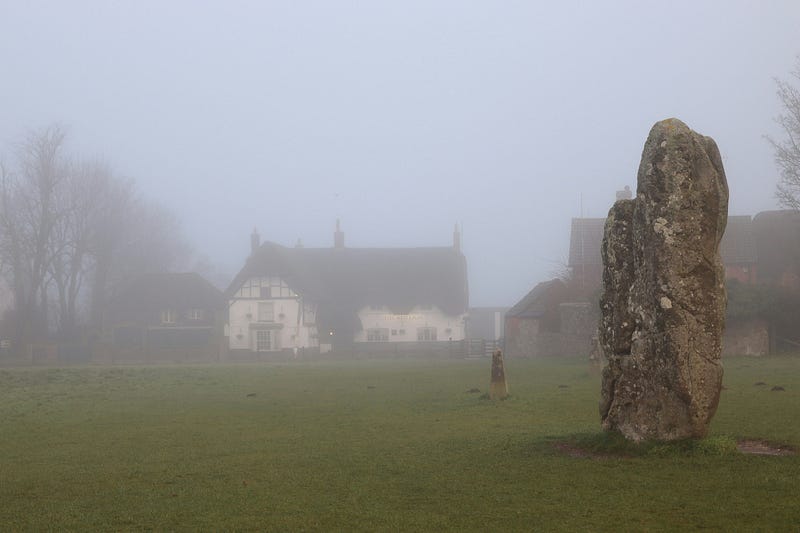
Kazuo Ishiguro opens Never Let Me Go by casually introducing us to Kathy H., our narrator and guide, whose voice is conversational, reflective, and deeply nostalgic. As she drives through the quaint English countryside, her mind constantly meanders back to Hailsham – her alma mater, an elite boarding school where she grew up from a very young age. She narrates her memories of Hailsham with fondness, though it looks like she is selecting them piece by piece, carefully identifying which details should be revealed and which are best left concealed. The pavilion holds a special place in her heart.
Kathy mentions a distinct habit she has, whenever she drives past a roadside sports pavilion, she checks to see if it resembles the one at Hailsham, looking around to see whether it is Hailsham. She longs to go back to it, but it seems that the school might not even exist anymore. So, right from the first few pages, an unsettling fog creeps into the narrative.
The Sanctuary Within a Sanctuary
In Kathy’s memory, the pavilion at Hailsham represents something deeply comforting. It was an open, communal structure where students would gather to relax, shelter from the world, and gossip. It functions almost as a sanctuary within a sanctuary, a private pocket of safety inside an already enclosed and isolated world.
Yet, this relaxed and unassuming atmosphere is paired with a strange, clinical vocabulary. Vague terminology is introduced nonchalantly, evoking a darker reality operating just beneath the surface: carers, donors, and guardians.
We learn that the “guardians” are the adults who act as teachers, caretakers, and overseers of the children at Hailsham. While in these early chapters they appear kind, considerate, and firm, their very title implies that the children are protected and guarded from the outside world. This vocabulary works to make the children appear immensely important, as if they are precious, rare entities that need to be kept completely “pristine,” if you like.
The Hailsham Trio
By Chapter 3, the emotional core of the story crystallizes around three main characters, now separated by time but linked by an indelible past. We learn that Kathy is currently acting as a carer for Ruth, her closest friend from school, allowing her memory to piece together their childhood dynamics.
Kathy H. (The Observer): Kathy is the voice of the story. She is patient, watchful, and entrenched in reality. She moves through her memories trying to make sense of the gaps, reconstructing a fragile and elusive past.
Ruth (The Leader): Ruth is Kathy’s best friend, whom she is now caring for. In school, from as early as four or five years old, Ruth was the leader of the pack. She was imaginative and commandeering, frequently using her imagination to create narratives that controlled the playground politics among their peers.
Tommy (The Outcast): A boy who was ruthlessly bullied by the other children, often exploding into violent, screaming tantrums. The primary reason for his isolation was a lack of artistic talent — because in the closed world of Hailsham, art was everything
Looking Closer
What makes this opening so brilliant is how Ishiguro uses mundane schoolyard politics — art classes, playground bullying, and teenage gossip to mask a larger, systemic mystery. Why is art the ultimate measure of a child’s worth at Hailsham? Why are these children labeled as future “donors”? Is Ruth actually terminally ill in the present day, and if so, why?
I find myself sitting in that pavilion with Kathy, looking out at the foggy landscape. As I continue reading, the fog slowly dissipates.
 Shakirah Z Round Translations
Leave a comment